
What is microcement?
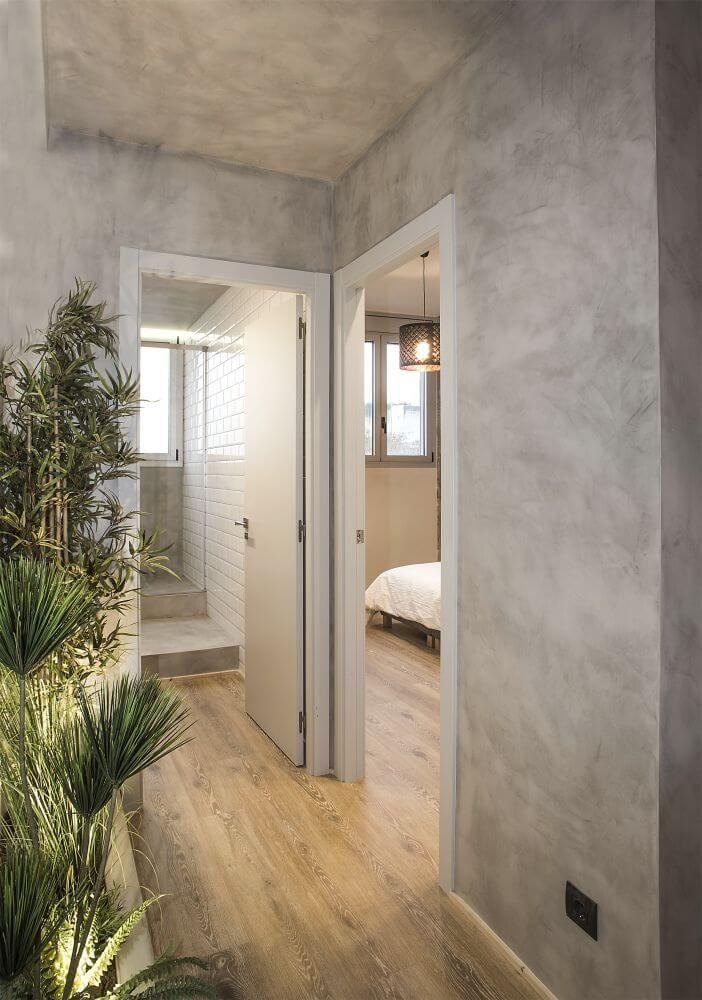
A cement based finishing layer of a few millimetres, applied by hand and finished with a protective top coat. Clean, seamless and waterproof.
How it is built up
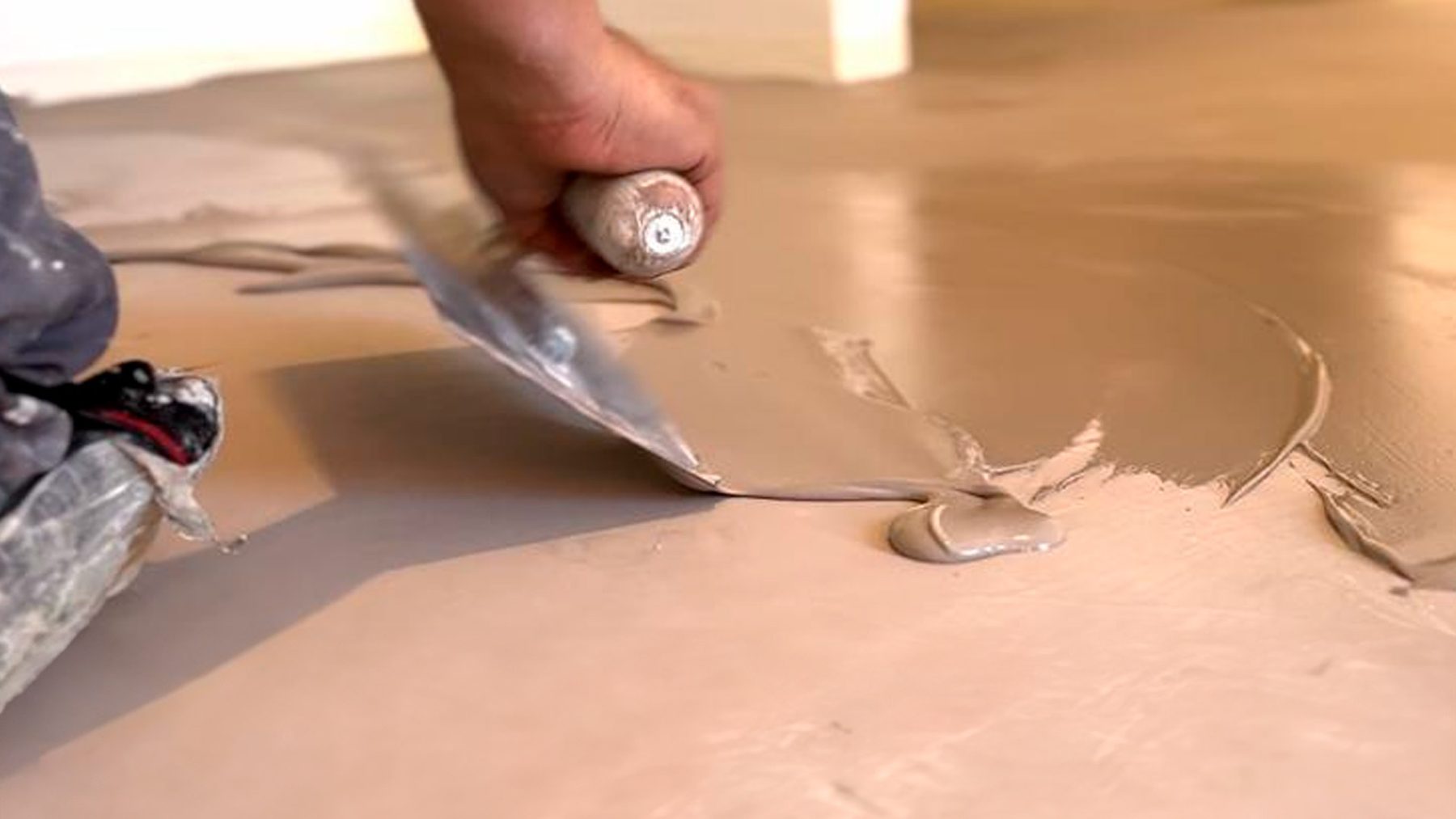
Microcement consists of cement, fine mineral fillers, pigments and resins. That combination provides adhesion, flexibility and a thin build up. After the base and finishing layers are applied, the surface is sanded and sealed with a two component top coat. Only then is it waterproof and wear resistant.
- Primer on the existing substrate
- Base layer with reinforcing mesh where needed
- Two fine finishing layers in the chosen colour
- Sealing with a matt or satin top coat
What it can go on
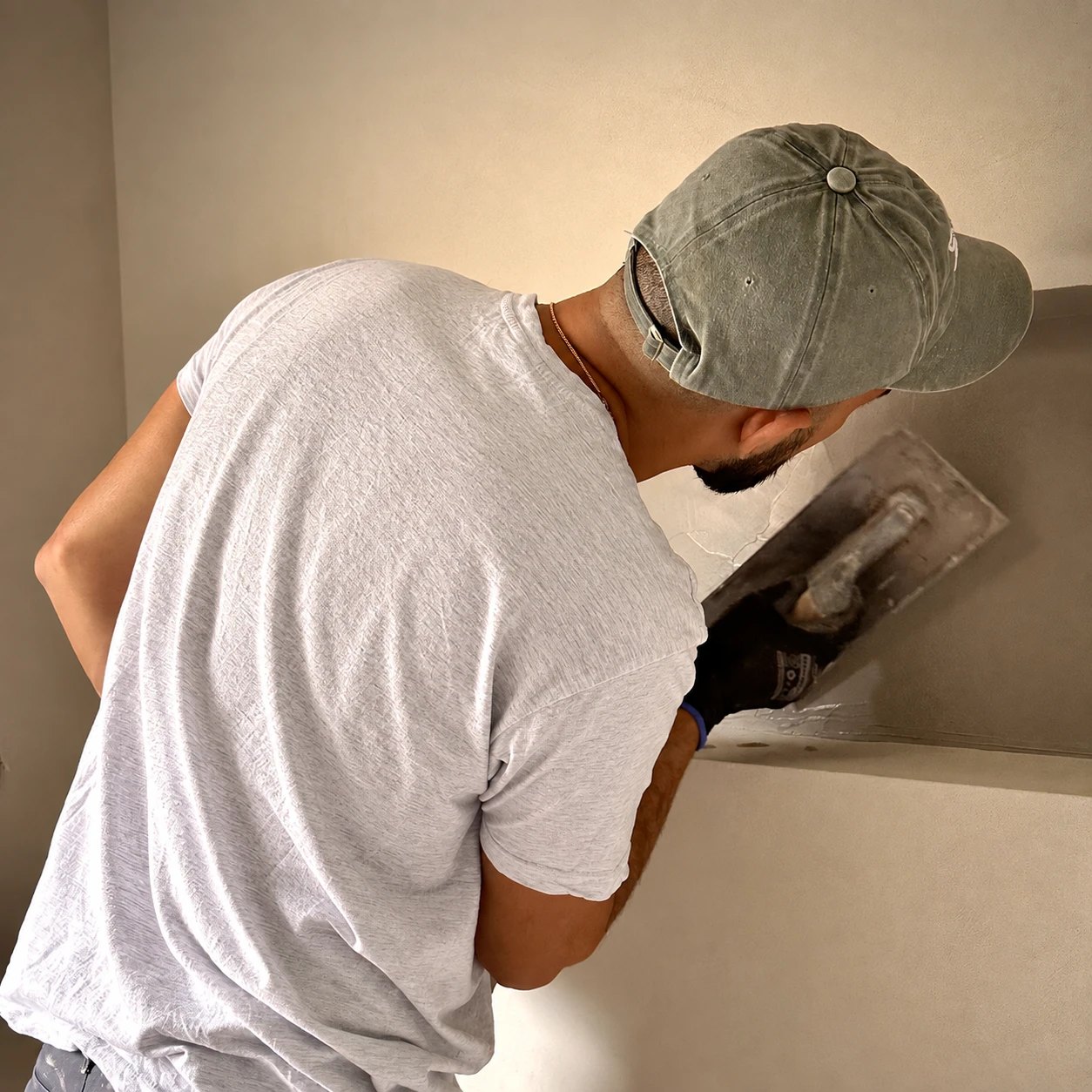
Thanks to its strong adhesion, microcement can go straight over almost any stable substrate: tiles, concrete, cement screed, anhydrite, plasterboard, plaster and MDF. So you can renew a bathroom or kitchen without demolishing the old tiles. Underfloor heating is no problem.
- Existing wall and floor tiles
- Concrete, cement and anhydrite screeds
- Plasterboard, plaster and MDF
- Underfloor heating
Why choose microcement
- SeamlessOne continuous surface, no joints to keep clean
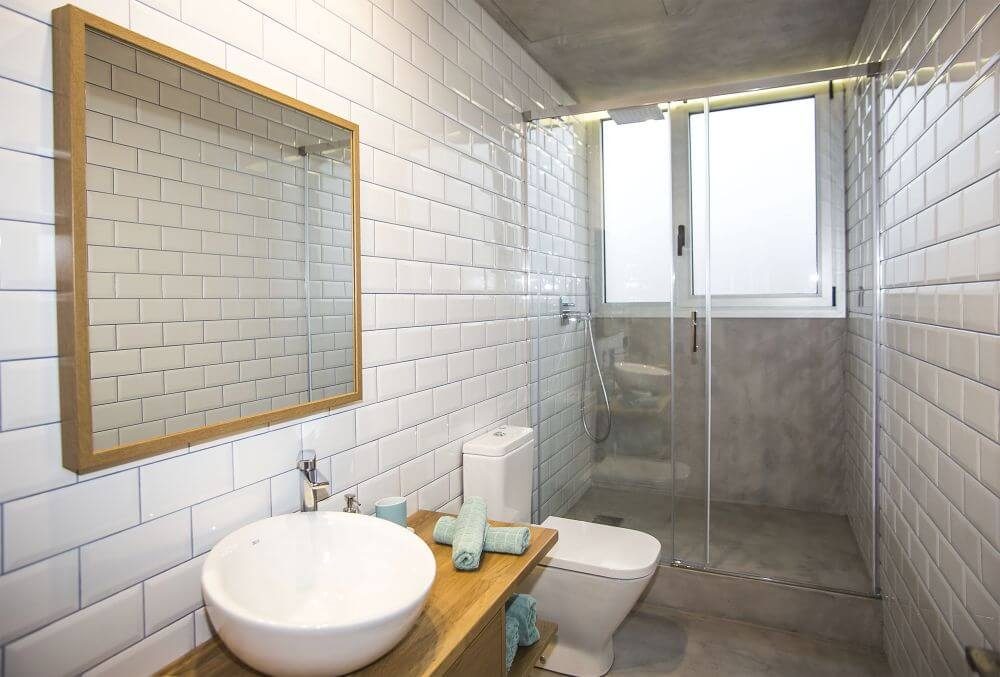
- WaterproofSuitable for showers, bathrooms and kitchens
- Thin2 to 5 mm, no adjusting of doors or thresholds
- FastNo demolition, so less disruption and a shorter lead time
- CareClean with water and a neutral soap
- UniqueHandwork, so every floor has its own pattern
Care
Microcement asks for little. Regular vacuuming or sweeping and mopping with a neutral soap is enough. Avoid aggressive or acidic cleaners and abrasive sponges. Every few years the top coat can be refreshed so the floor looks like new again.
Frequently asked questions
Is microcement the same as a concrete or resin floor?
No. A resin floor is a synthetic resin that is poured and flows completely flat. Microcement is applied by hand in thin layers and has a natural, slightly cloudy pattern. A real concrete floor is many centimetres thick, microcement only a few millimetres.
Can microcement crack?
Microcement is flexible and is reinforced with mesh where needed. Existing cracks in the substrate are treated first. With a stable substrate, cracking is very rare.
How long does installation take?
Allow four to five working days for an average bathroom and about a week for a living room floor. That includes drying times between layers. After sealing the floor can be walked on after 24 hours and fully loaded after a week.
Is it slippery?
As standard, microcement is comparable to a smooth tile. For wet rooms and outdoors we use a line with more grain, or add an anti slip to the top coat.
Do you work throughout the Netherlands?
Yes. We are based in Vlaardingen and install microcement throughout the Netherlands.
Blog about microcement
 Explained
Microcement, béton ciré or concrete plaster: what is the difference?
Microcement, béton ciré, concrete plaster and concrete look are often mixed up. Learn the differences and which finish suits a floor, wall or…
Read moreBathroomMicrocement in the bathroom over existing tiles: how it works
Microcement in the bathroom can go straight over existing tiles. Read how it works, the pros and cons, how long it takes and what to watch out for.
Read more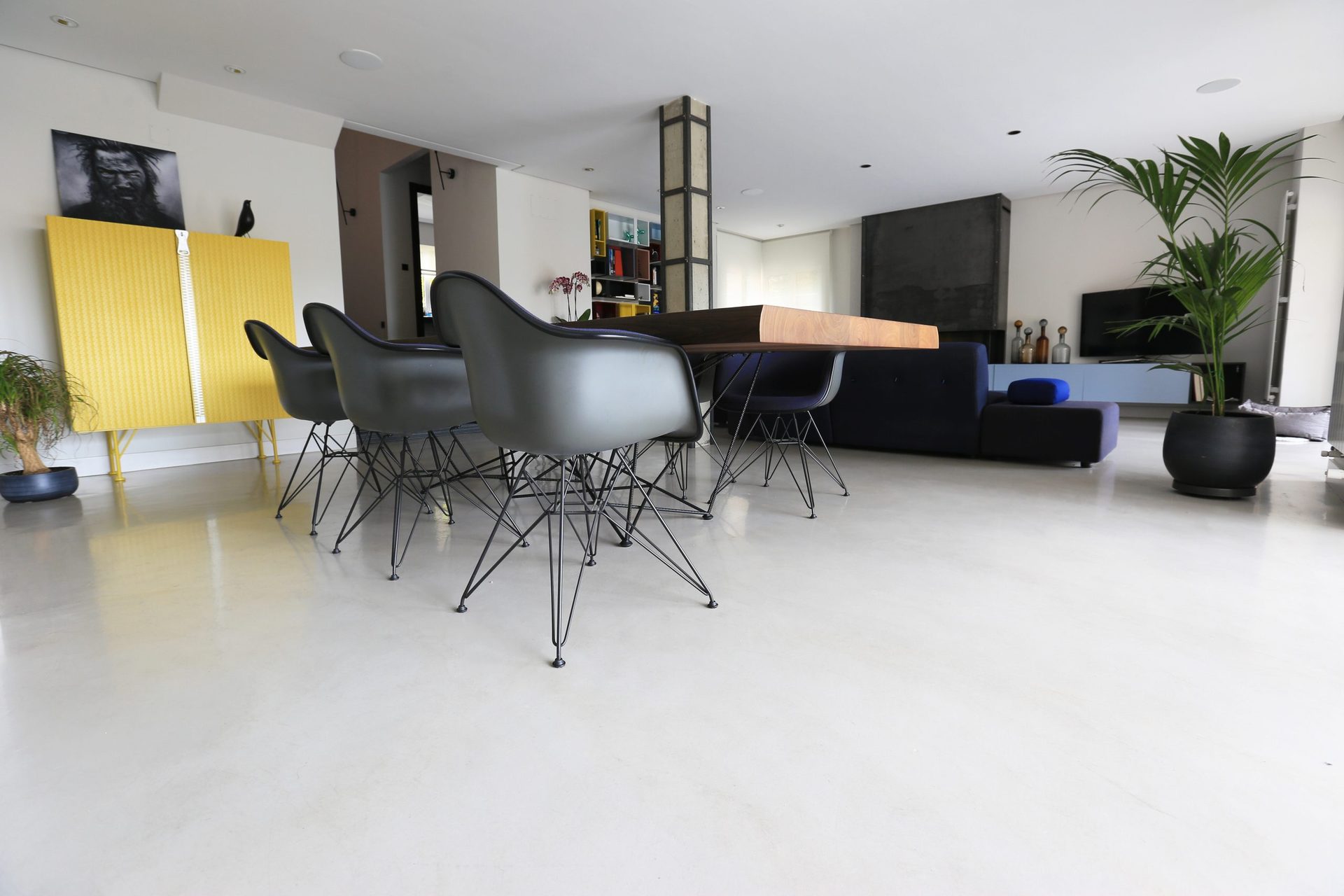 Prices
What does a microcement floor cost per m²?
What does microcement cost per m²? Read what determines the price of a microcement floor or bathroom, what a realistic indication is and how to save…
Read moreCurious what microcement would do in your home?
Call us for a no obligation chat, or request a quote right away. By appointment you are welcome in our home showroom in Vlaardingen.
Request a quote
